Raccoons in Your Attic? Humane Removal & Repair
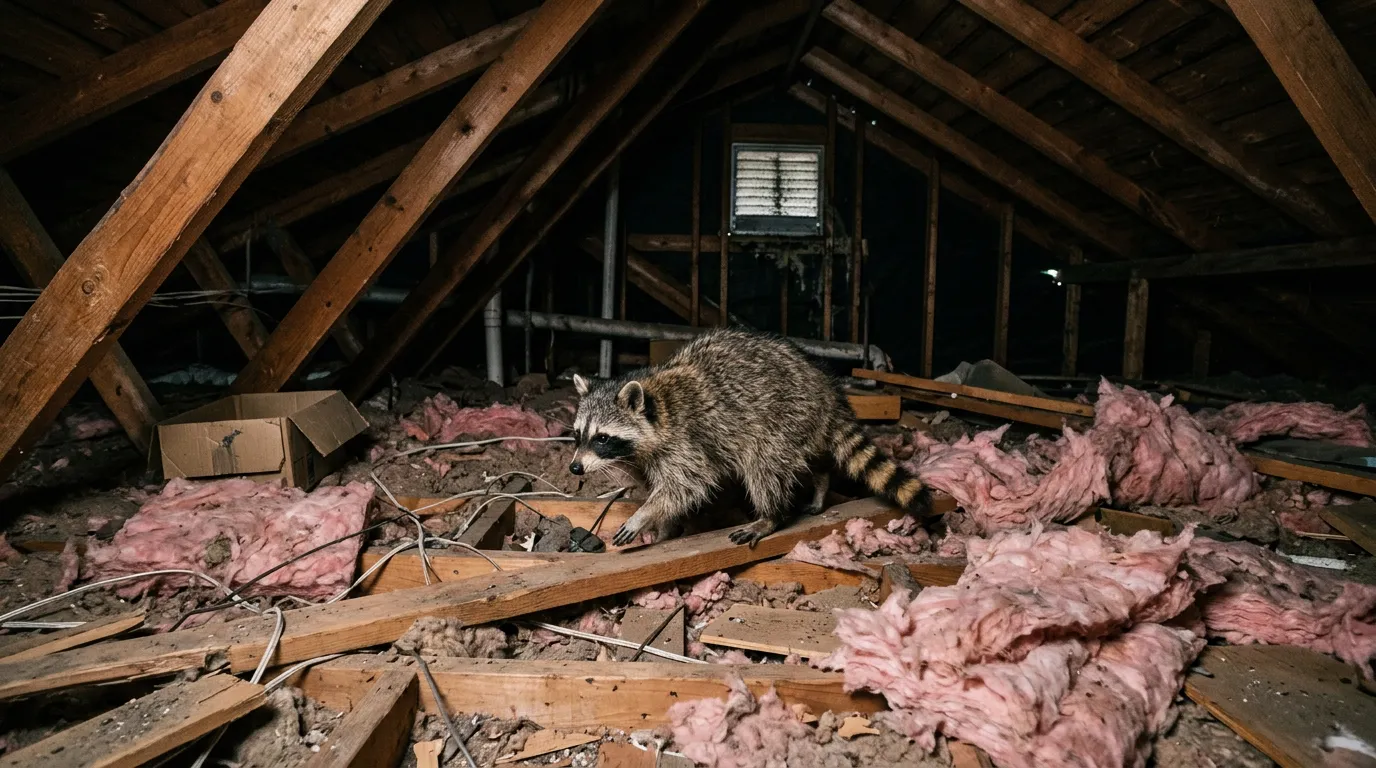
Raccoons in an attic are one of the most common wildlife problems homeowners face. They enter through vents, soffits, and roof gaps, then tear up insulation, damage wiring, and leave droppings that can pose health concerns. Call to connect with a local wildlife professional who can inspect your attic, remove raccoons humanely, and seal every entry point.
What to Know Before You Call
A raccoon problem is easier to solve when the inspection, removal, cleanup, and prevention work together. Note where you hear activity, whether it happens during the day or at night, and any damage you can see without entering an unsafe area. That information helps a local wildlife professional choose the safest next step.
If you are comparing options, review how to get rid of raccoons humanely, learn why entry-point sealing matters, and see the factors that affect removal cost.
Signs of the Problem
Look for these signs if you suspect raccoons:
- Heavy thumping or dragging sounds overhead at night
- Chittering, purring, or whining noises from the ceiling
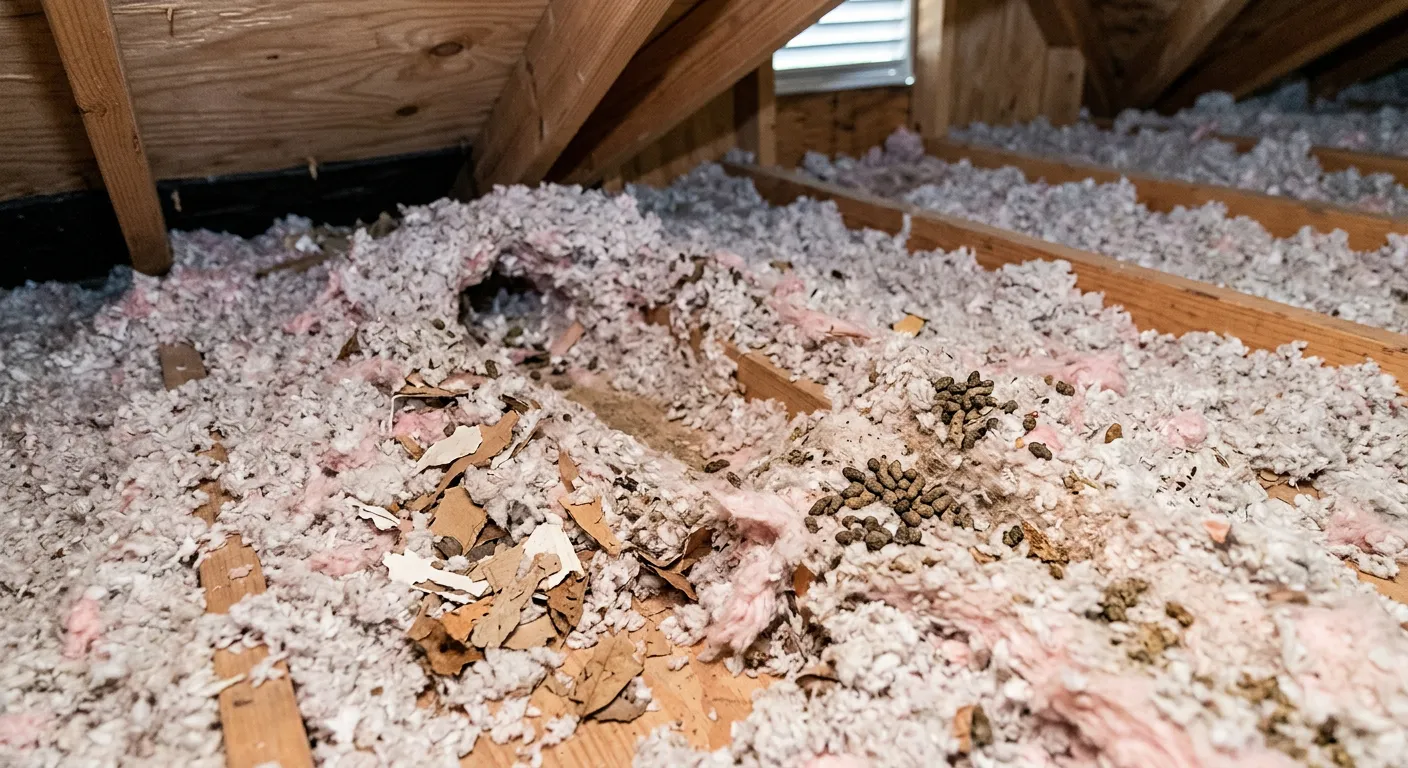
- Torn, matted, or displaced insulation in the attic
- Latrine sites with piles of droppings on plywood or insulation
- Damaged vents, soffits, or shingles on the roof
- Odors or ceiling stains from urine and accumulated droppings
- Dark grease rub marks on roof edges or downspouts
Why Raccoons Choose This Area
Attics are warm, dry, and quiet, making them ideal denning sites for raccoons.
Mothers seek out attics in spring to raise young, since the space is safe from predators.
Mature trees near homes give raccoons easy access from branches to rooftops.
Once inside, raccoons rarely leave on their own unless the entry point is sealed.
Risks of Leaving Them There
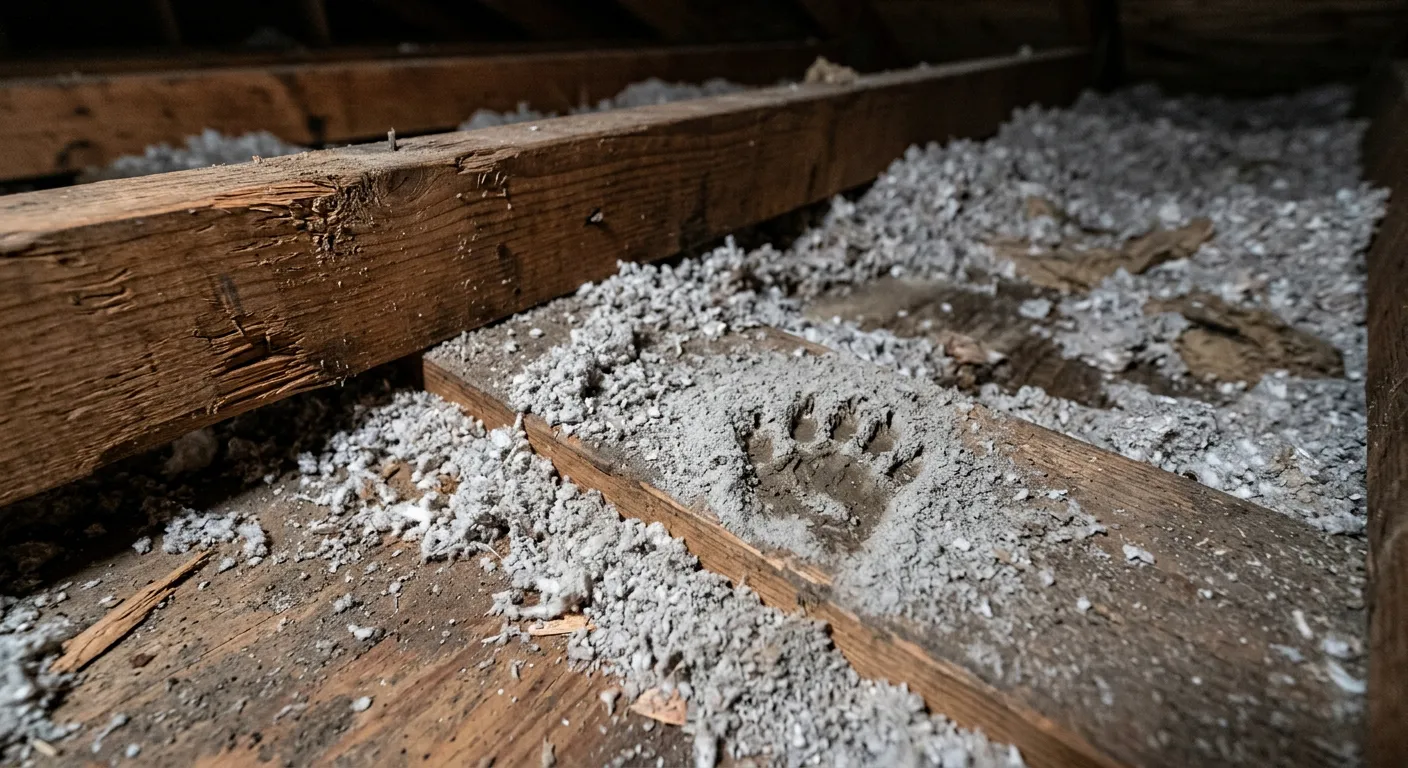
- Structural damage to insulation, drywall, and wooden framing
- Chewed electrical wiring that can create fire hazards
- Contaminated ductwork and insulation from urine and droppings
- Health concerns from raccoon droppings, which can carry parasites
- Repeat visits if entry points are not sealed after removal
Speak to a Wildlife Pro
Have raccoons in your home? Call to get connected with experienced local wildlife professionals who can help.
How Humane Raccoon Removal Works
A local wildlife professional will follow these steps:
- 1
Inspection
A local wildlife professional inspects your attic and roofline to identify entry points, nesting sites, and the number of raccoons present.
- 2
Removal Plan
The provider develops a humane removal plan based on the inspection, considering whether babies are present and the best approach for your situation.
- 3
Humane Removal
Raccoons are removed using humane, lawful methods. If babies are present, the provider keeps the family together where possible and legal.
- 4
Sealing
Every entry point is sealed with durable materials like heavy-gauge steel mesh and flashing to prevent raccoons from returning.
- 5
Cleanup
Contaminated insulation and droppings are removed safely, and the area is disinfected and deodorized.
- 6
Follow-up
The provider may recommend a follow-up visit to confirm the entry points remain sealed and no new activity has occurred.
What Not to Do
- Do not block the entry hole while animals are still inside, as they may cause more damage trying to escape
- Never use poison, which is inhumane, often illegal, and leaves animals to die in your walls or attic
- Do not attempt to handle raccoon babies or droppings without proper protective equipment
- Do not assume raccoons will leave on their own, especially during birthing season
Plan for Removal and Prevention Together
Removing the visible animal is only one part of protecting a home. A complete plan should account for young, secondary openings, contaminated materials, and the conditions that attracted raccoons in the first place. Depending on the situation, the next helpful step may be attic decontamination, damage repair, or prevention work.
Why Call RaccoonRemovalPros
RaccoonRemovalPros connects you with experienced local wildlife professionals who understand attic raccoon problems. Call to get connected with a provider who can inspect your home and plan humane removal and sealing.
Cities We Serve
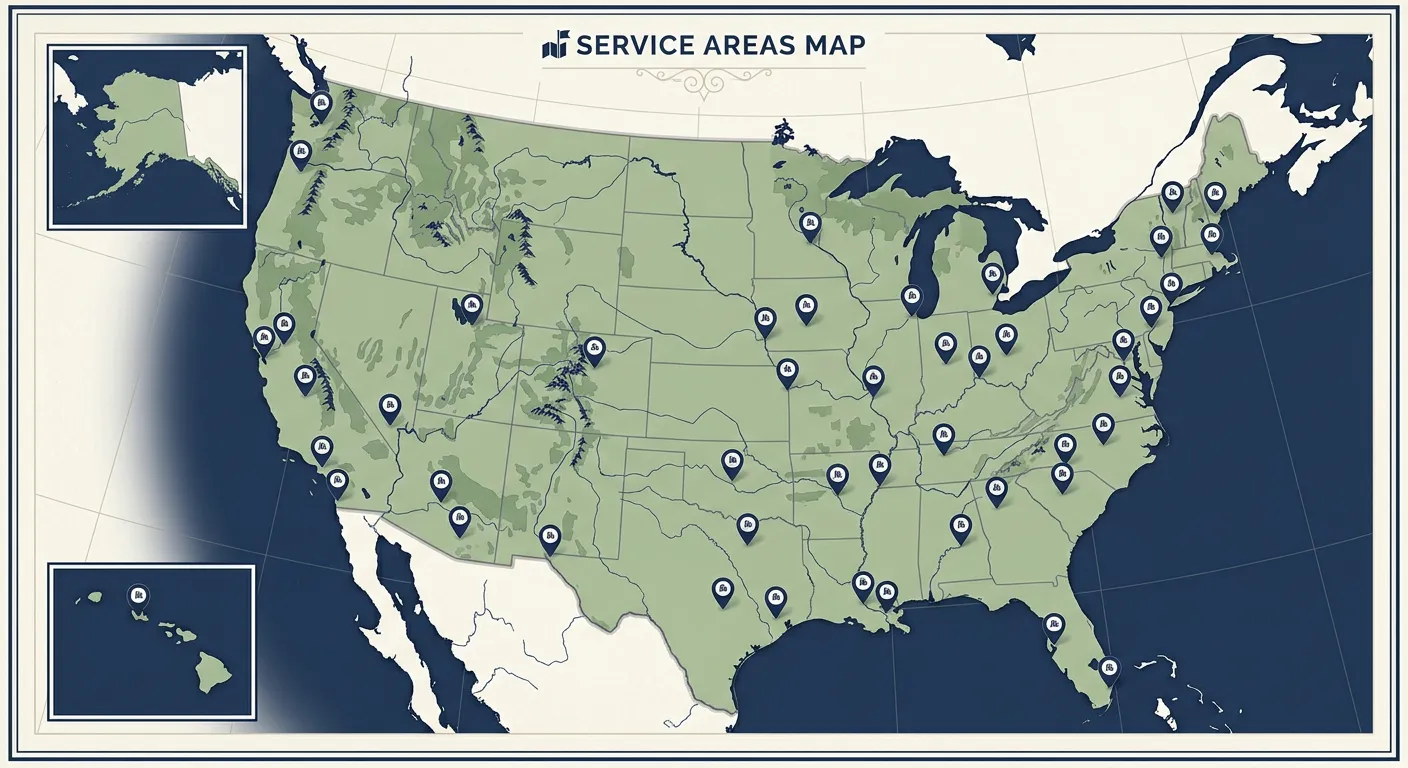
We connect homeowners with local wildlife professionals in cities across the US:
Frequently Asked Questions
How can I tell if it is raccoons and not squirrels or rats?
Raccoons are larger and heavier, so their sounds are more like thumping and dragging rather than scurrying. Chittering and purring are common raccoon vocalizations. A professional inspection can confirm which animal is present.
Can I trap raccoons in my attic myself?
Trapping rules vary by state, and handling raccoons without proper equipment and training can be dangerous, especially if babies are present. Call a local wildlife professional who follows state regulations and uses humane methods.
Do repellents or lights work to get raccoons out of an attic?
Repellents, lights, and ultrasonic devices have limited effectiveness and are not a reliable solution. The most effective approach is humane removal followed by sealing all entry points.
How long does raccoon removal take?
Removal time depends on the number of animals, whether babies are present, and how many entry points need sealing. A local provider can give you an estimated timeline after inspecting your attic.
Will my homeowners insurance cover raccoon damage?
Coverage varies by policy. Some policies cover damage from raccoons, while others exclude it. Check with your insurance provider and ask about your specific coverage for wildlife damage.
Related Services
Call Now for Raccoon Help
Call to connect with a local wildlife professional who can inspect your home, remove raccoons humanely, and seal entry points.