Raccoon vs Opossum vs Squirrel: How to Tell Them Apart
Noises in your attic or walls could be raccoons, opossums, or squirrels, and each requires a different approach. This guide helps you identify which animal you are dealing with by their sounds, droppings, and damage patterns so you can get the right help.
How to Use This Raccoon Guide
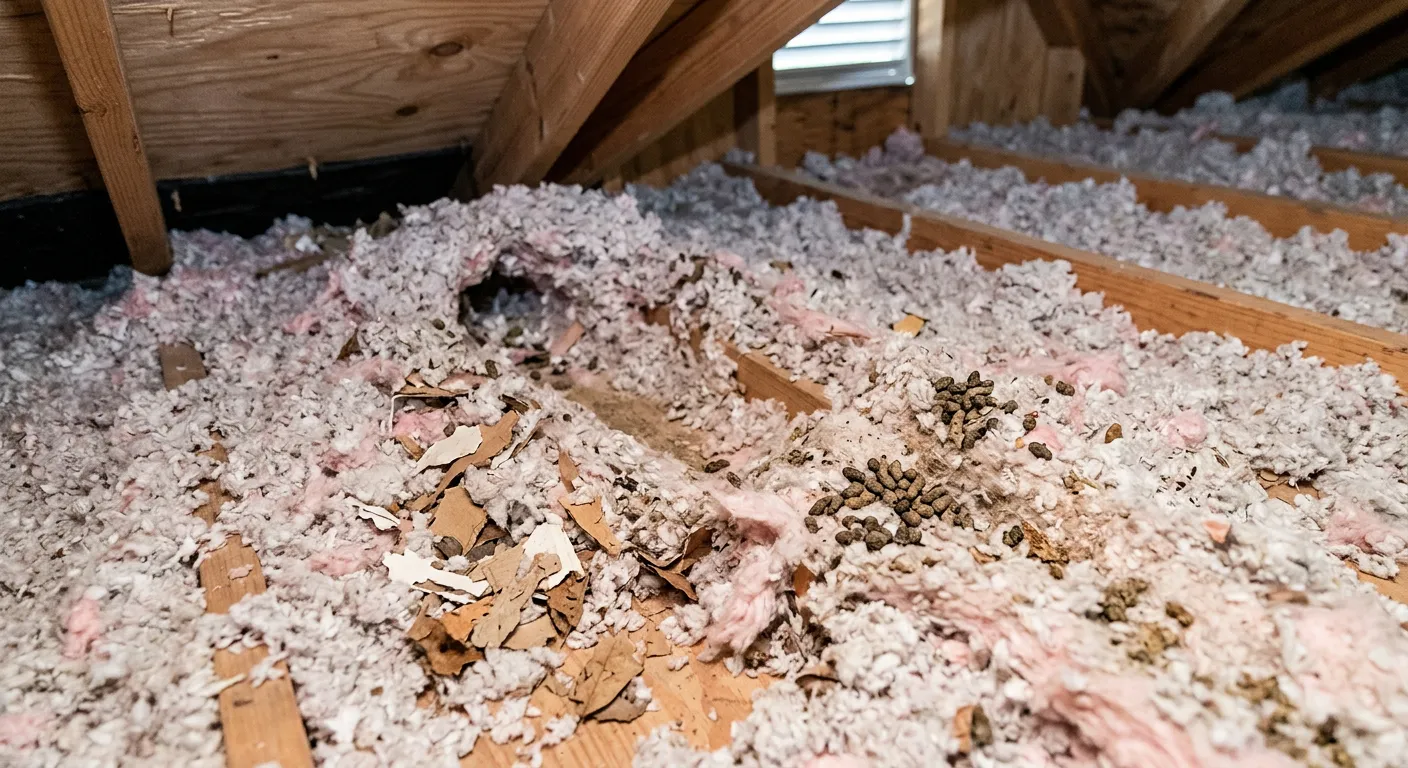
Start with the signs and safety information that match what you are seeing, then follow the recommended next step for your home. Raccoon activity can involve an active den, hidden entry points, contaminated insulation, or a seasonal issue, so solving the immediate problem and preventing a return both matter.
For practical help, learn about raccoon proofing and entry-point sealing, review the raccoon removal cost factors, or call to connect with a local wildlife professional.
Raccoons: Heavy and Vocal
Raccoons are the largest of the three and create the heaviest sounds. Key characteristics include heavy thumping and dragging in the ceiling at night, chittering, purring, and whining vocalizations, large tube-shaped droppings in latrine sites, and significant damage to insulation, vents, and soffits. Raccoons are nocturnal, so most activity happens after dark.
Raccoons are strong enough to tear open vents, push aside soffits, and chew through roofing materials. Their entry points are usually larger and more visible than those of squirrels or opossums.
Opossums: Slow and Shuffling
Opossums are less common in attics than raccoons or squirrels but do enter homes. Key characteristics include heavy shuffling and dragging sounds, slower and less vocal than raccoons, droppings that are similar in size to raccoon droppings but often more scattered, and less structural damage than raccoons. Opossums are also nocturnal.
Opossums typically enter through existing openings rather than creating their own. If you have an opossum in your attic, there is likely an existing gap or entry point that needs to be sealed after removal.
Squirrels: Light and Fast
Squirrels are the smallest and most active of the three. Key characteristics include light, fast scurrying and scratching sounds, activity that peaks at dawn and dusk, small pellet-shaped droppings scattered rather than in latrine sites, gnawing and chewing sounds from teeth, and damage to wiring, wood, and stored items. Squirrels are diurnal, so activity happens during the day.
Squirrels can fit through smaller openings than raccoons and often chew their way in through wood, siding, or vent screens. Their entry points may be smaller and harder to spot.
Comparison Summary
Here is a quick comparison to help you identify which animal is in your attic:
- Raccoons: heavy thumping at night, chittering, large droppings in piles, significant damage
- Opossums: heavy shuffling at night, less vocal, scattered droppings, less damage
- Squirrels: light scurrying at dawn and dusk, gnawing, small scattered droppings, chewed wiring
- All three require professional removal and sealing of entry points
Related Raccoon Removal Topics
The right solution depends on where the raccoon is living and what evidence it has left behind. Compare raccoons in an attic, safe raccoon droppings cleanup, and long-term raccoon prevention before deciding what to do next.
Need Professional Help?
If you are dealing with a raccoon problem, call to connect with a local wildlife professional. See our Raccoons in Attic page for more information.
Frequently Asked Questions
How can I tell if it is a raccoon or squirrel in my attic?
Raccoons create heavy thumping and are vocal at night. Squirrels create light scurrying and are active at dawn and dusk. If the sounds are heavy and at night, raccoons are likely. If light and during the day, squirrels are more likely.
Do opossums go in attics?
Yes, though less commonly than raccoons or squirrels. Opossums usually enter through existing openings rather than creating their own. Their sounds are heavy but slower and less vocal than raccoons.
Can squirrels and raccoons be in the attic at the same time?
It is unlikely, as raccoons and squirrels do not typically share a space. However, if one species has been removed and the entry point was not sealed, a different species may move in. Sealing after removal prevents this.
Do all three animals require the same removal approach?
No. Each species has different behaviors and may be subject to different state rules. A professional can identify the animal and plan the appropriate humane removal approach for that species.
What should I do if I am not sure which animal is in my attic?
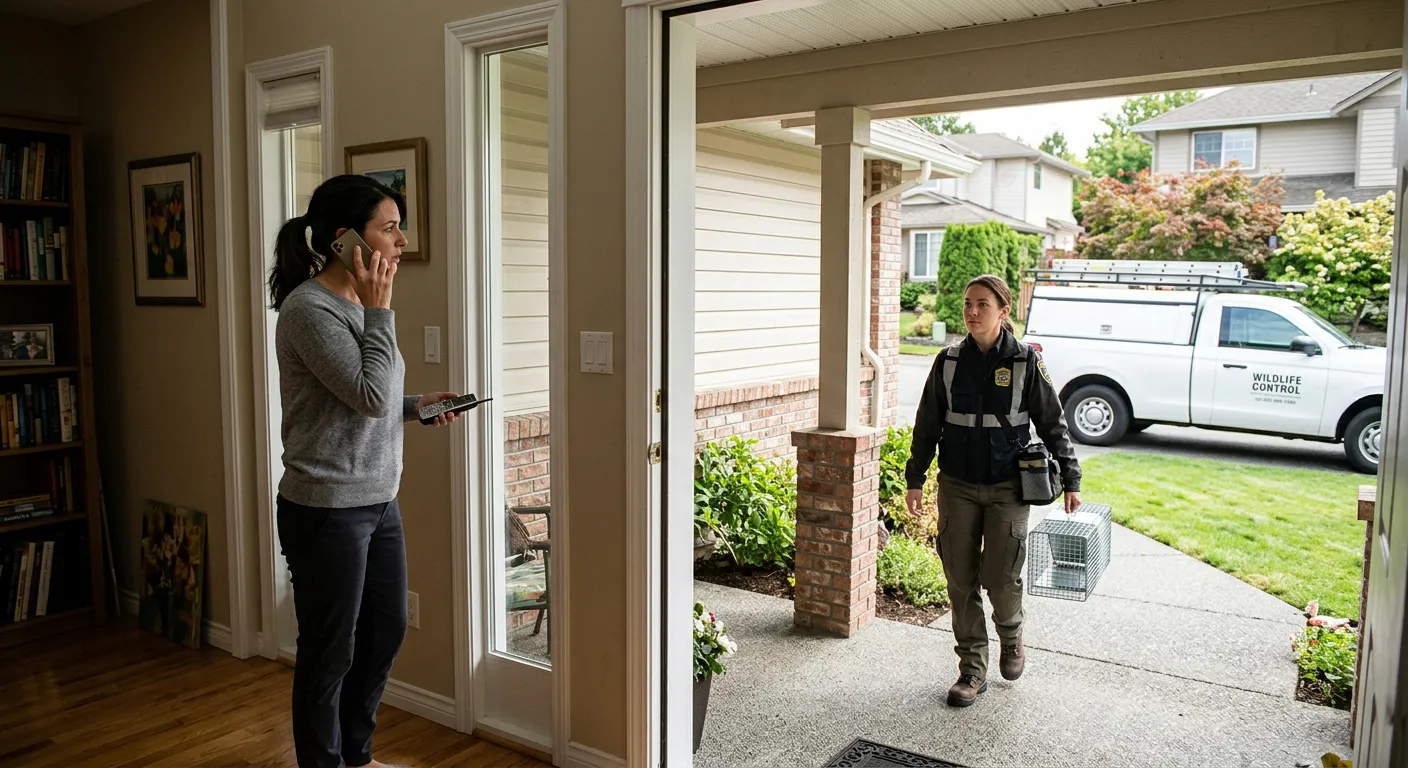
Call a local wildlife professional. They can inspect your attic, identify the animal based on sounds, droppings, and damage, and plan the appropriate removal and sealing approach.
Call Now for Raccoon Help
Call to connect with a local wildlife professional who can inspect your home, remove raccoons humanely, and seal entry points.