Raccoon Poop Cleanup & Attic Decontamination
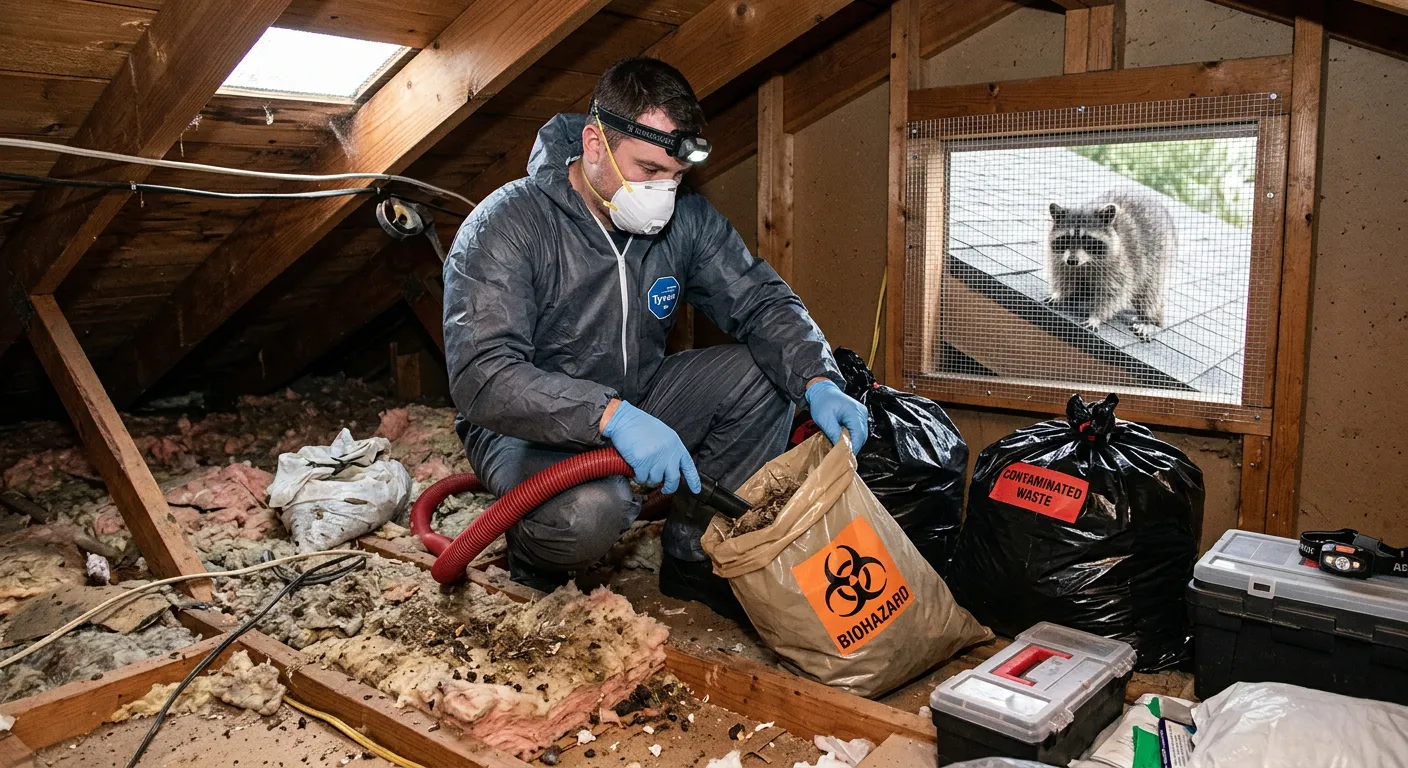
Raccoons use specific spots in the attic as latrine sites, leaving piles of droppings that can carry parasites and pose health concerns. Cleaning up raccoon droppings requires proper protective equipment and careful handling. Never sweep or vacuum dry droppings, as this can release particles into the air. Call to connect with a local wildlife professional who can handle cleanup and decontamination safely.
What to Know Before You Call
A raccoon problem is easier to solve when the inspection, removal, cleanup, and prevention work together. Note where you hear activity, whether it happens during the day or at night, and any damage you can see without entering an unsafe area. That information helps a local wildlife professional choose the safest next step.
If you are comparing options, review how to get rid of raccoons humanely, learn why entry-point sealing matters, and see the factors that affect removal cost.
Signs of the Problem
Look for these signs if you suspect raccoons:
- Piles of raccoon droppings concentrated in one area of the attic
- Strong ammonia odor from accumulated urine
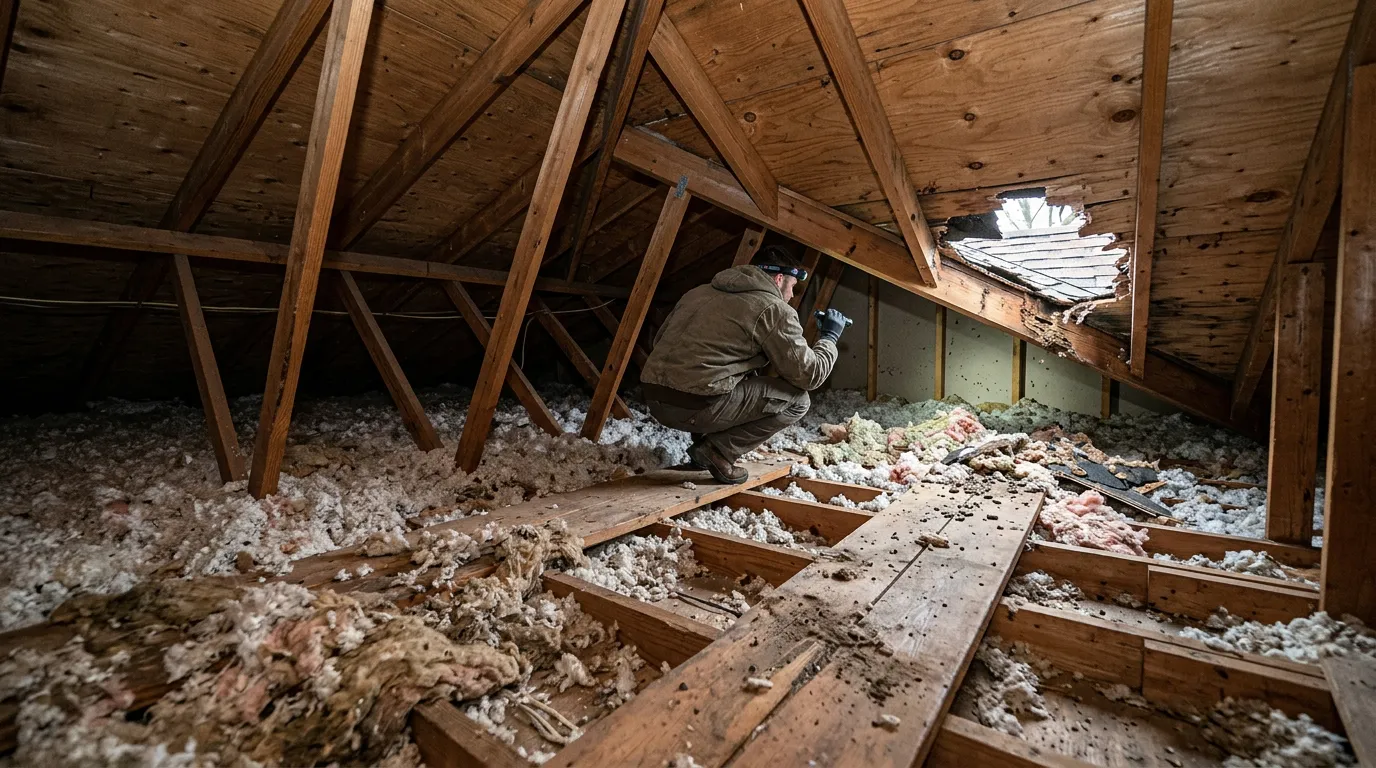
- Matted, contaminated insulation around the latrine site
- Stains on ceiling drywall from urine soaking through
- Visible roundworm eggs in or near droppings (too small to see reliably)
Why Raccoons Choose This Area
Raccoons use the same spots repeatedly as latrines, so contamination concentrates over time.
Droppings can carry raccoon roundworm eggs, which pose health risks if inhaled or ingested.
Dry droppings can release particles into the air when disturbed, making cleanup hazardous.
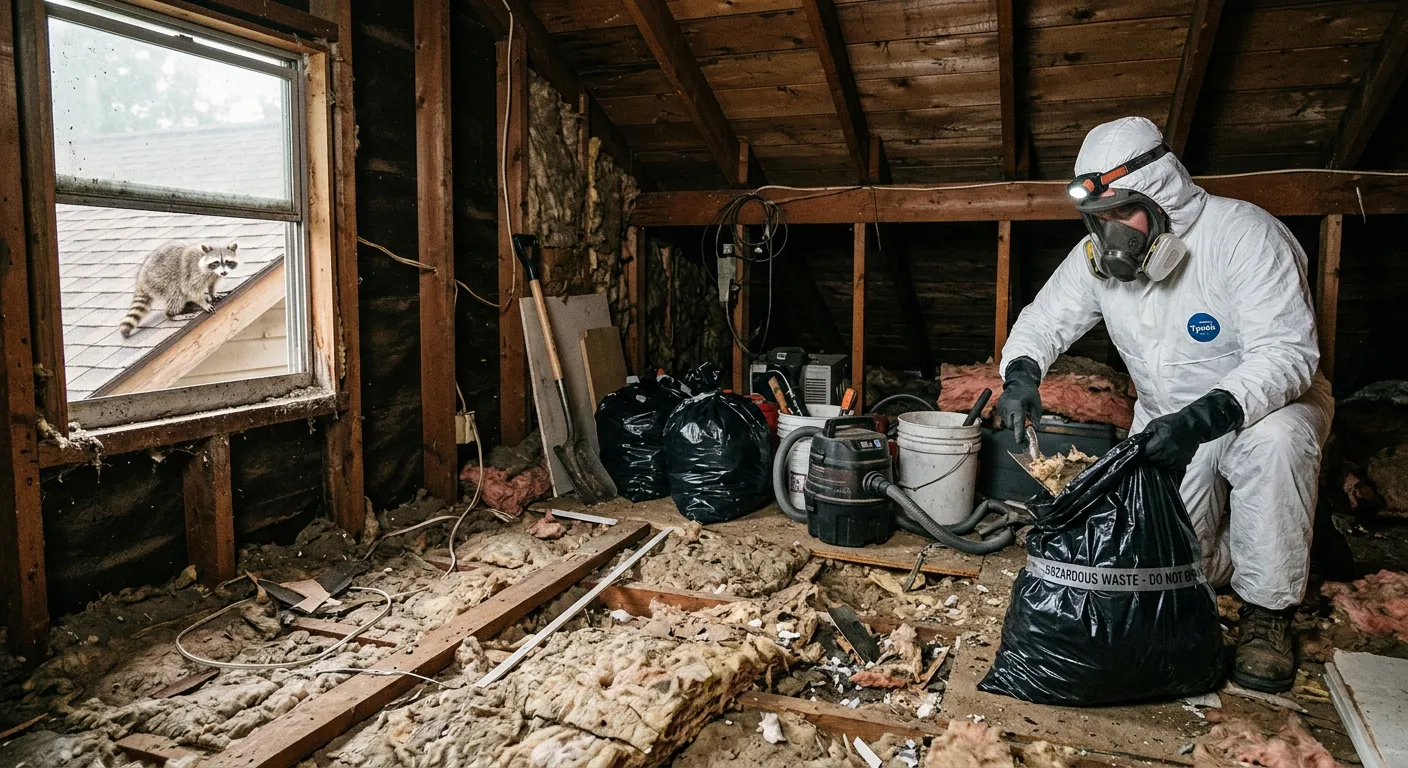
Proper cleanup requires protective gear, disinfection, and lawful disposal.
Risks of Leaving Them There
- Raccoon droppings can contain raccoon roundworm eggs, which are resistant to common disinfectants
- Sweeping or vacuuming dry droppings can release particles into the air
- Contaminated insulation can spread odor and contamination throughout the attic
- Health concerns from exposure to droppings, urine, and nesting material
- Improper disposal can spread contamination to other areas
Speak to a Wildlife Pro
Have raccoons in your home? Call to get connected with experienced local wildlife professionals who can help.
How Humane Raccoon Removal Works
A local wildlife professional will follow these steps:
- 1
Assessment
A local wildlife professional assesses the extent of contamination, including latrine sites and damaged insulation.
- 2
Protective Gear
The provider uses proper protective equipment, including respirators, gloves, and suits, to handle contaminated material safely.
- 3
Removal
Droppings, nesting material, and contaminated insulation are carefully removed without creating airborne dust.
- 4
Disinfection
The area is disinfected and deodorized using appropriate products and methods.
- 5
Re-insulation
If insulation was removed, new insulation can be installed to restore the attic to proper condition.
- 6
Sealing
Entry points are sealed to prevent raccoons from returning and recontaminating the space.
What Not to Do
- Never sweep or vacuum dry raccoon droppings, as this can release particles into the air
- Do not handle droppings without proper protective equipment
- Do not attempt cleanup if you are unsure of the risks
- Consult public-health guidance, such as CDC resources, for safe raccoon droppings cleanup practices
Plan for Removal and Prevention Together
Removing the visible animal is only one part of protecting a home. A complete plan should account for young, secondary openings, contaminated materials, and the conditions that attracted raccoons in the first place. Depending on the situation, the next helpful step may be attic decontamination, damage repair, or prevention work.
Why Call RaccoonRemovalPros
RaccoonRemovalPros connects you with experienced local wildlife professionals who understand safe raccoon droppings cleanup and attic decontamination. Call to get connected with a provider who can handle cleanup safely and thoroughly.
Cities We Serve
We connect homeowners with local wildlife professionals in cities across the US:
Frequently Asked Questions
What is raccoon roundworm?
Raccoon roundworm is a parasite found in raccoon droppings. Eggs can be present in dried droppings and pose health risks if inhaled or ingested. Consult public-health guidance, such as CDC resources, for information on safe cleanup practices.
Can I clean up raccoon droppings myself?
Cleanup requires proper protective equipment and careful handling. If you are unsure of the risks or the extent of contamination, call a professional. Never sweep or vacuum dry droppings.
Does all the insulation need to be removed?
Insulation that is contaminated with droppings or urine should be removed. A professional can assess which areas of insulation are affected and what needs replacement.
How do I know if my attic is contaminated?
Signs include visible droppings, strong odor, matted insulation, and ceiling stains. A professional inspection can confirm the extent of contamination and what cleanup is needed.
Is attic decontamination covered by insurance?
Coverage varies by policy. Some homeowners policies cover cleanup related to wildlife damage, while others exclude it. Check with your insurance provider about your specific coverage.
Related Services
Call Now for Raccoon Help
Call to connect with a local wildlife professional who can inspect your home, remove raccoons humanely, and seal entry points.