Raccoon Trapping: Humane, Lawful Methods
Raccoon trapping is sometimes necessary when raccoons cannot be excluded or when they are causing persistent problems. Trapping must be done humanely and in compliance with state wildlife regulations, which vary significantly. Call to connect with a local wildlife professional who uses humane trapping methods and follows your state's rules.
What to Know Before You Call
A raccoon problem is easier to solve when the inspection, removal, cleanup, and prevention work together. Note where you hear activity, whether it happens during the day or at night, and any damage you can see without entering an unsafe area. That information helps a local wildlife professional choose the safest next step.
If you are comparing options, review how to get rid of raccoons humanely, learn why entry-point sealing matters, and see the factors that affect removal cost.
Signs of the Problem
Look for these signs if you suspect raccoons:
- Raccoons repeatedly visiting your property despite prevention efforts
- Persistent raccoon activity in or around your home
- Raccoons that cannot be excluded because they are not entering through a sealable point
- Damage to property that requires the raccoon to be physically removed
Why Raccoons Choose This Area
Trapping should only be done by professionals who understand state regulations.
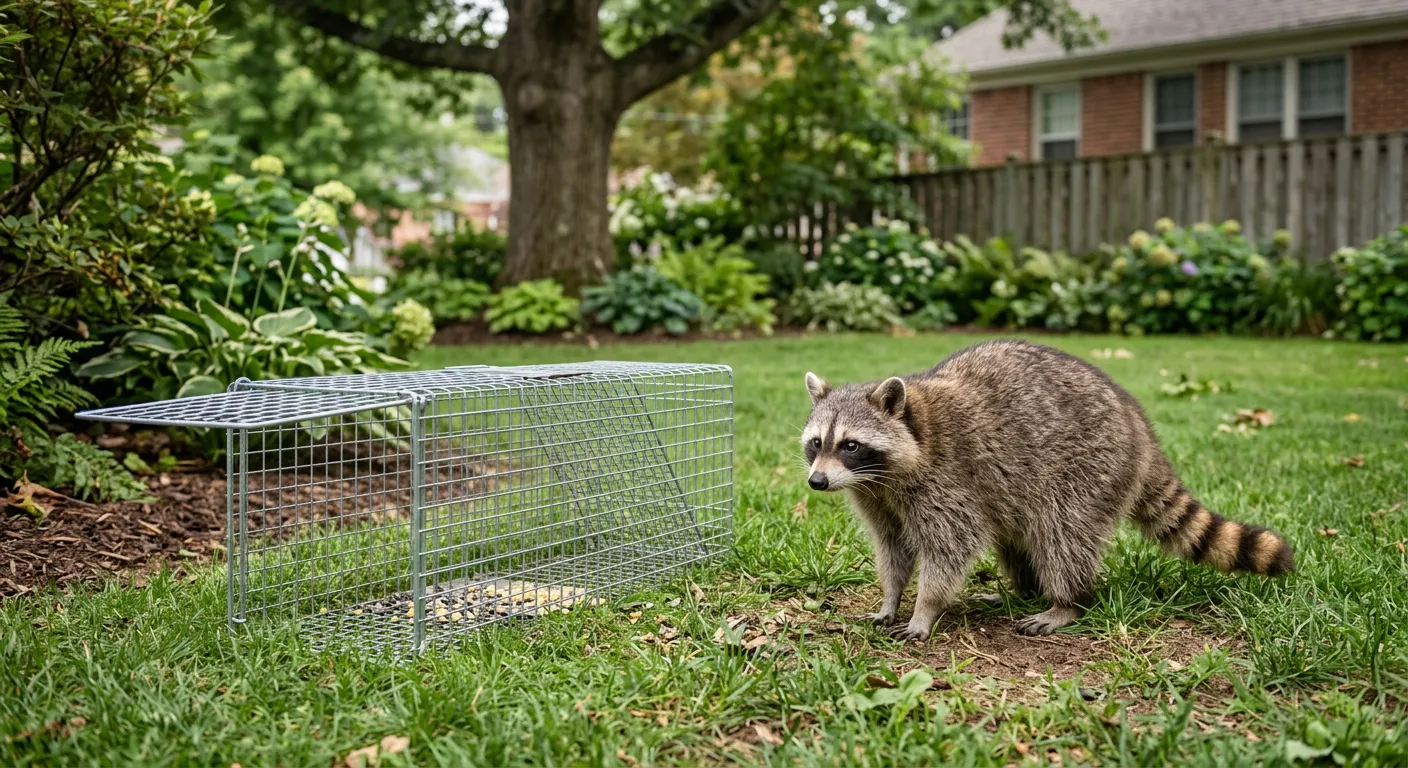
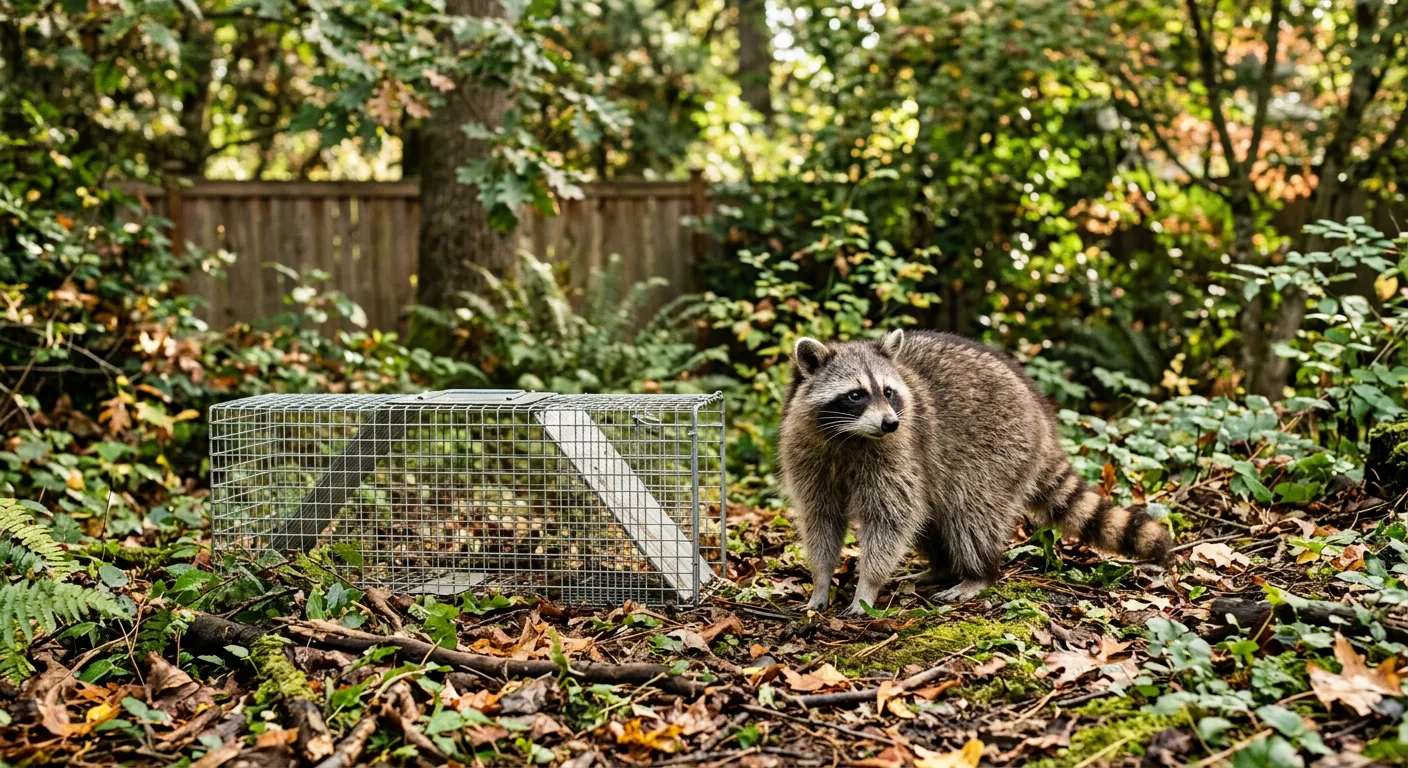
Humane trapping uses cage traps that do not harm the animal.
Traps must be checked regularly to ensure the animal is not left in distress.
State rules govern how trapped raccoons can be handled and where they can be released.
Risks of Leaving Them There
- Improper trapping can injure raccoons or leave them in distress
- Trapping without understanding state rules can result in violations
- DIY trapping can expose you to bites, scratches, and disease risks
- Trapping a mother without considering babies can leave young to starve
- Relocating raccoons without authorization may be illegal in your state
Speak to a Wildlife Pro
Have raccoons in your home? Call to get connected with experienced local wildlife professionals who can help.
How Humane Raccoon Removal Works
A local wildlife professional will follow these steps:
- 1
Assessment
A local wildlife professional assesses the situation to determine whether trapping is the right approach.
- 2
Trap Placement
Humane cage traps are placed strategically near activity areas or entry points.
- 3
Monitoring
Traps are checked regularly to ensure any captured raccoon is handled promptly and humanely.
- 4
Removal
Captured raccoons are removed and handled according to state wildlife regulations.
- 5
Sealing
After trapping, entry points are sealed to prevent new raccoons from moving in.
- 6
Follow-up
The provider confirms the problem is resolved and the property is secured.

What Not to Do
- Never use body-gripping or kill traps, which are inhumane and often illegal for raccoons
- Do not set traps without checking them regularly, as animals can suffer if left too long
- Do not attempt to handle a trapped raccoon yourself
- Do not relocate a raccoon without checking your state's rules, as relocation may be restricted
Plan for Removal and Prevention Together
Removing the visible animal is only one part of protecting a home. A complete plan should account for young, secondary openings, contaminated materials, and the conditions that attracted raccoons in the first place. Depending on the situation, the next helpful step may be attic decontamination, damage repair, or prevention work.
Why Call RaccoonRemovalPros
RaccoonRemovalPros connects you with experienced local wildlife professionals who use humane trapping methods and follow state regulations. Call to get connected with a provider who can assess whether trapping is right for your situation.
Cities We Serve
We connect homeowners with local wildlife professionals in cities across the US:
Frequently Asked Questions
Is raccoon trapping legal in my state?
Trapping rules vary by state and change over time. Check with your state wildlife agency for current requirements, or call to connect with a local professional who follows state rules.
What kind of traps are used?
Humane cage traps are standard. These allow the raccoon to be captured without injury and handled according to state regulations. Body-gripping and kill traps are not recommended.
How often should traps be checked?
Traps should be checked at least daily, and often more frequently, to ensure any captured animal is handled promptly and humanely. A professional provider manages trap checking as part of the service.
Can trapped raccoons be relocated?
Relocation rules vary by state. Some states allow relocation to approved areas, while others prohibit it. The professional you are connected with follows your state's current rules.
What happens after trapping?
After the raccoon is removed, entry points should be sealed to prevent new raccoons from moving in. Trapping without sealing is only a temporary fix.
Related Services
Call Now for Raccoon Help
Call to connect with a local wildlife professional who can inspect your home, remove raccoons humanely, and seal entry points.